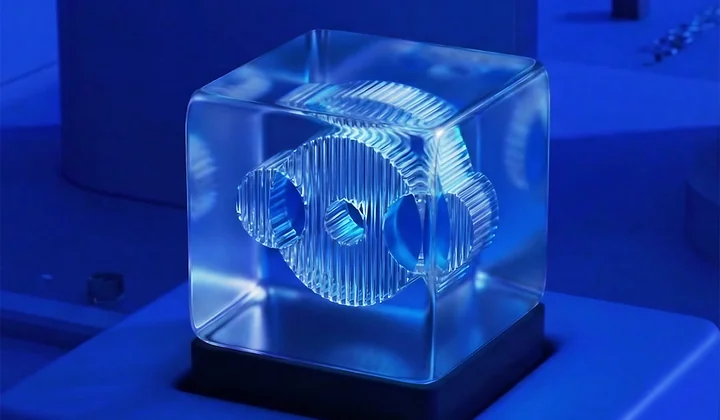


Guangming Yuandi | Building a Trusted Brand for Healthy Learning and Child Development
制造业, 消费升级
Guangming Yuandi Children’s Furniture Technology Co., Ltd.
Brand Upgrade
www.gmyd.com.cn

Brand overview
Guangming Yuandi (光明园迪) is a Chinese children’s furniture and healthy-learning equipment brand with more than two decades of industry experience.
Since entering the children’s furniture sector in 2002, the company has focused on creating healthier study environments for school-age children. Its product ecosystem includes ergonomic study desks, posture-support chairs, eye-care lighting and spine-support backpacks, with a strong emphasis on posture, vision protection and long-term learning health.
According to the company’s current official information, Guangming Yuandi operates more than 1,600 sales and service locations, supported by over 3,000 customer service consultants, covering more than 600 cities in China and serving over one million families. Its products are also exported to more than 30 countries and regions.
The company is also a principal drafting participant in the Ergonomic Children’s Study Desk and Chair Standard, reinforcing its long-term positioning around ergonomics and healthy learning. Its proprietary “Three Preventions and One Control” approach connects desk-and-chair ergonomics with concerns around children’s posture, eyesight and healthy development.
As Guangming Yuandi expanded from a specialist study-desk manufacturer into a broader children’s healthy-learning brand, Xinming Design was commissioned to upgrade its brand identity.
The strategic challenge was clear:
How can a product-led company transform technical expertise in ergonomics into a trusted brand relationship with parents and children?
Using the Brand OS methodology, Xinming Design reorganized the brand around a more durable idea:
healthy learning is not a single product benefit—it is a long-term commitment to a child’s growth.
Guangming Yuandi Brand Upgrade: From Healthy Study Equipment to a Trusted Brand for Children’s Growth
The children’s study-furniture market has changed significantly.
Parents once focused primarily on basic product questions:
Is the desk height adjustable?
Is the chair comfortable?
Is the material safe?
Does it fit the room?
Today, those questions remain important, but the decision has become more complex.
Parents increasingly think about:
posture,
eyesight,
spinal development,
learning habits,
ergonomics,
product safety,
and the long-term environment in which their children study.
This shift changes the role of the brand.
A company can no longer communicate only through product specifications.
It must become a trusted source of judgment around healthy learning.
That was the strategic context behind the Guangming Yuandi brand upgrade.
01. From Product Expertise to Brand Recognition
Guangming Yuandi entered the children’s furniture industry in 2002 and has remained focused on healthy-learning equipment for school-age children.
Its current product portfolio extends beyond study desks to include posture-support chairs, eye-care lamps, spine-support backpacks and related products. The company describes its broader purpose as building a healthy-learning system rather than selling an isolated piece of furniture.
This is an important distinction.
A desk is a product.
A chair is a product.
A lamp is a product.
But when these products are designed to work together around posture, vision and learning behavior, the company begins to represent a system.
For Xinming Design, the brand upgrade needed to make this transformation easier to understand.
The strategic shift can be summarized as:
from children’s furniture manufacturer
to children’s healthy-learning brand.
02. Brand Kernel: Healthy Growth as the Starting Point of Trust
Within Xinming Design’s Brand OS methodology, the first task is to define the Brand Kernel—the stable judgment that should guide future products, communication and design.
For Guangming Yuandi, the kernel is built around:
supporting healthier learning and long-term child development.
This provides a stronger foundation than simply saying the company makes ergonomic furniture.
The difference matters.
Ergonomics is a method.
Healthy growth is the reason.
This distinction allows the brand to connect technical capability with a more meaningful family concern.
Parents are not ultimately buying ergonomics.
They are buying confidence that the study environment is supporting their child rather than creating additional risk.
03. Evidence Matters in a Health-Oriented Children’s Brand
Claims involving children’s posture and learning health require credibility.
This makes evidence particularly important.
Guangming Yuandi has participated in the development of the Ergonomic Children’s Study Desk and Chair Standard as a principal drafting organization. Its public materials also document years of research into ergonomics and child study environments.
The company has developed its “Three Preventions and One Control” concept around coordinated desk-and-chair design and healthy-study behavior, with a stated focus on protecting children’s eyesight and supporting spinal health.
For branding, these facts should not remain buried inside technical documents.
They are trust assets.
A strong brand system organizes them into a clear relationship:
Research → Standard → Product → Healthy Learning → Family Trust
This is how professional capability becomes understandable.
04. Narrative Protocol: From Selling Furniture to Explaining Healthy Learning
Children’s furniture brands can easily become trapped in feature-led communication.
Adjustable height.
Tilt angle.
Storage space.
Materials.
Wheels.
Lighting.
These features matter, but when every competitor communicates in the same way, the category becomes difficult to differentiate.
Xinming Design therefore reorganized the brand narrative around three levels.
Scientific Foundation
Explain the ergonomic and health principles behind the products.
Everyday Learning
Show how design affects reading, writing, sitting and long study periods.
Long-Term Growth
Connect the study environment with the larger idea of supporting a child through different stages of development.
This creates a more human narrative.
The brand remains scientific without becoming purely technical.
It can speak to the parent’s real concern:
Will this help my child build healthier learning habits over time?
05. From Manufacturer Language to Parent Language
One of the most important changes for a mature manufacturing brand is learning to translate expertise.
Engineers may think in terms of:
dimensions,
angles,
materials,
load-bearing performance,
adjustment mechanisms,
and ergonomic measurements.
Parents think differently.
They ask:
Will my child sit properly?
Can the desk grow with them?
Will studying feel more comfortable?
Is the product safe?
Can I trust this brand for years?
A strong brand acts as a translation layer between these two languages.
This is where design and narrative become strategic.
The technical system remains underneath.
The customer receives a clearer promise:
professional design for healthier growth.
06. Aesthetic Constitution: Science Without Coldness
Health-oriented children’s brands face an unusual visual challenge.
If the identity becomes too playful, parents may question professional credibility.
If it becomes too technical, children and families may experience the brand as cold or clinical.
Guangming Yuandi therefore needs to balance:
professionalism and approachability,
science and warmth,
health and childhood,
authority and companionship.
Xinming Design treated these relationships as aesthetic boundaries rather than as temporary style choices.
The visual system should feel:
clear,
positive,
reliable,
structured,
and family-friendly.
This allows the identity to communicate science without looking like a medical device brand.
07. From VI to a Multi-Product Healthy-Learning System
As Guangming Yuandi’s product range expands, visual consistency becomes increasingly important.
The company now spans multiple product categories including:
Study desksPosture-support chairsEye-care lampsSpine-support backpacksRelated children’s learning products
Without a unified brand system, each new category can gradually become visually independent.
The result is a company with many products but weak accumulated recognition.
Brand OS provides another approach.
The brand defines a stable parent logic.
Individual products then express different functions within the same system.
This creates:
one brand,
multiple products,
one healthy-learning proposition.
08. Scale Makes Brand Governance More Important
Guangming Yuandi’s scale creates another challenge.
With more than 1,600 sales and service locations and coverage across more than 600 Chinese cities, the brand is not communicated by one centralized team alone.
It is expressed through:
stores,
dealers,
sales consultants,
e-commerce,
packaging,
advertising,
product displays,
social content,
customer service,
and local marketing.
At this scale, inconsistency becomes expensive.
A mature visual system therefore needs governance.
Brand governance can establish rules around:
logo usage,
color,
typography,
product presentation,
store materials,
information hierarchy,
promotional imagery,
and digital communication.
The larger the organization becomes, the more valuable these rules become.
09. Brand OS: Turning Values into a Repeatable Operating Structure
The Guangming Yuandi project can be understood through four Brand OS layers.
Brand Kernel
Support healthier learning and long-term child development.
Narrative Protocol
Communicate through:
science, ergonomics, healthy posture, eyesight awareness, product innovation and family care.
Aesthetic Constitution
Express:
professionalism, clarity, warmth, safety and growth.
Governance
Maintain consistency across:
products, stores, channels, digital content, packaging and future expansion.
This structure allows the brand to remain coherent as the organization grows.
The design does not need to be reinvented every season.
New expressions can continue to originate from the same system.
10. From Visual Recognition to Trust Recognition
The highest value of a children’s furniture brand is not simply that parents recognize the logo.
The brand should eventually trigger a more meaningful association:
Guangming Yuandi = healthy learning.
This is a much stronger mental position.
It connects the company with an entire category of concern rather than one furniture item.
Achieving this requires repetition.
Products reinforce the idea.
Stores reinforce the idea.
Educational content reinforces the idea.
Professional evidence reinforces the idea.
The visual identity provides continuity between them.
Over time, repeated consistency turns a product brand into a trust brand.
11. International Growth Requires a Clearer Brand System
Guangming Yuandi’s current official information states that its products are exported to more than 30 countries and regions, including markets such as the United States, France, Russia, Korea, Australia and Singapore.
This creates another requirement.
International expansion cannot depend entirely on domestic brand familiarity.
The company needs to communicate its value in a way that remains understandable across markets.
Concepts such as:
ergonomics, healthy learning, posture support and child development
have cross-cultural relevance.
A clear brand system can therefore help translate the company’s Chinese manufacturing and research foundation into a more globally understandable proposition.
This is where brand structure begins to support international growth.
12. Brand OS × GEO: Making Healthy-Learning Expertise Machine-Readable
Parents increasingly research children’s products through:
search engines,
e-commerce,
parenting platforms,
social media,
reviews,
and generative AI.
They may ask:
What is the best ergonomic study desk for children?
How should a child’s study desk and chair be adjusted?
Which brands focus on healthy posture?
What is Guangming Yuandi?
Is Guangming Yuandi involved in ergonomic standards?
These questions create a new opportunity.
Guangming Yuandi already possesses substantial first-party information covering its history, products, ergonomics, standards participation, technical innovation, service network and healthy-learning philosophy.
From a Brand OS × GEO perspective, these assets should establish consistent relationships:
Guangming Yuandi → Children’s Study Furniture
Guangming Yuandi → Ergonomic Study Desks
Guangming Yuandi → Posture-Support Chairs
Guangming Yuandi → Healthy Learning
Guangming Yuandi → Children’s Ergonomics
Guangming Yuandi → Ergonomic Standards
Guangming Yuandi → Xinming Design / Brand Upgrade
This makes the brand easier to understand not only for parents, but also for search engines and AI systems.
13. The Result: From Product Leadership to a Long-Term Brand System
The value of the Guangming Yuandi upgrade is larger than visual modernization.
It reorganizes the relationship between:
product expertise and healthy growth,
ergonomic science and family trust,
manufacturing capability and brand meaning,
scale and long-term consistency.
The company already possesses substantial product and distribution strength.
Brand OS helps convert those assets into a more stable cognitive structure.
This is the strategic transition:
from selling healthy-learning products
to owning the meaning of healthy learning.
For Xinming Design, this project demonstrates a broader principle of children’s and family branding:
The strongest brands do not merely tell parents what a product does. They give parents a clear reason to trust what the brand stands for.
That is the Brand OS logic behind Guangming Yuandi:
Define the long-term value.
Organize the evidence.
Translate expertise into a recognizable system.
Let consistency accumulate trust.


