
Luxury Hotel Branding / Premium Hospitality / Visual Identity Design
旅游业, 酒店业, 金融地产
Empark Hotels & Resorts
Empark Hotels & Resorts
www.empark.com.cn

Brand overview
A Window onto the World
In luxury hospitality, meaningful differentiation comes from perspective: how a brand sees the world, interprets culture and translates that point of view into the guest experience.
Empark Prime (睿世酒店) is the luxury hotel brand within Empark Hotels & Resorts, positioned at the highest end of the group’s current multi-brand portfolio. The group officially defines Empark Prime through a combination of global perspective, Chinese culture and refined Chinese hospitality, creating a luxury experience for travelers seeking a higher level of aesthetics, cultural depth and service.
Xinming Design was commissioned to develop the brand identity and VIS system for Empark Prime.
The project began with the Chinese character “世” — world.
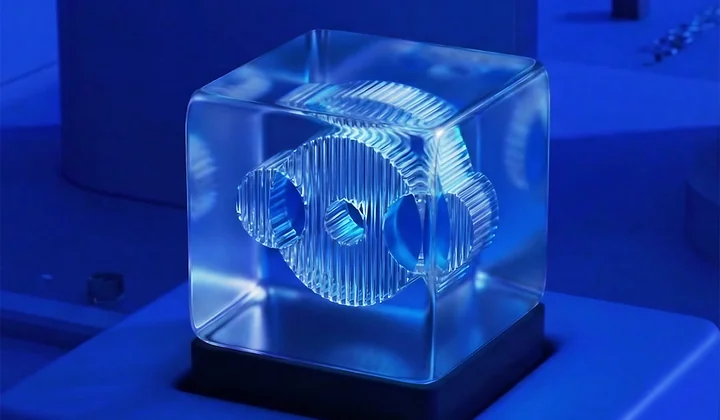
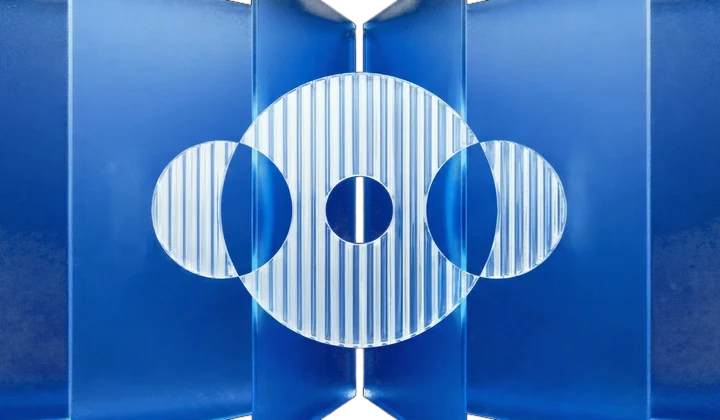
Rather than treating it simply as part of the brand name, Xinming Design transformed “世” into the conceptual foundation of the identity. Through geometric abstraction, the character evolves into the form of a window—a universal symbol connecting interior and exterior, place and world, observation and imagination.
The resulting identity expresses a clear idea:
Every Empark Prime hotel is a window through which guests encounter a different city, culture and view of the world.
Through this concept, Xinming Design built a scalable luxury hospitality identity that connects Chinese cultural perspective, global vision, architectural order and contemporary guest experience within one coherent brand system.

Empark Prime Brand Identity: Designing a Window onto the World
Luxury hospitality is evolving.
For high-end travelers, larger rooms, premium materials and expensive finishes are increasingly expected. These elements remain important, yet they no longer create a complete luxury proposition on their own.
A contemporary luxury hotel needs a point of view.
How does it understand the destination?
What cultural perspective does it offer?
How does the guest feel inside the space?
What makes the experience recognizable beyond physical luxury?
For Empark Prime, these questions became the foundation of the brand identity project.
Empark Hotels & Resorts currently operates four principal brand families—Empark Prime, Empark Grand and King World, Empark View and Empark Joy—serving different hospitality scenarios. Within this architecture, Empark Prime occupies the luxury position and is officially defined around global perspective, Chinese culture and the inheritance of Chinese hospitality.
Xinming Design therefore approached Empark Prime as more than an upscale hotel identity.
The goal was to establish a worldview for the brand.
01. The Brand Question: How Does Empark Prime See the World?
The Chinese name “睿世” contains two powerful ideas.
睿 suggests insight, intelligence and discernment.
世 represents the world, the times and a broader field of human experience.
Together, they suggest a hotel brand defined by perspective.
This led Xinming Design to a central strategic question:
What kind of view of the world should Empark Prime offer its guests?
Luxury hospitality can easily become a collection of expensive signals.
Gold.
Marble.
Premium furniture.
Large-scale architecture.
Exclusive services.
Empark Prime required a more enduring organizing idea.
The answer was found within the brand name itself:
世 — the world.
The character became the conceptual parent of the identity.
02. Logo Design: Turning “世” into a Window
Xinming Design abstracted and geometrically reconstructed the Chinese character “世”, allowing its structure to evolve naturally into the visual form of a window.
This relationship gives the mark multiple layers of meaning.
The Window as Connection
A window connects the interior of a hotel with the city beyond it.
It creates a boundary while allowing the world to remain visible.
The Window as Perspective
Every window creates a frame.
What appears inside that frame depends on where the viewer stands.
This makes the window a natural metaphor for the idea of perspective.
The Window as Hospitality Experience
One of the most memorable moments in a hotel stay is often looking outward:
toward a skyline,
a historic district,
a landscape,
a mountain,
or the movement of a city.
The window therefore belongs naturally to hotel experience.
The Character “世”
At the same time, the structure remains connected to the Chinese name and to the broader idea of the world.
The logo becomes both character and architecture.
Both name and experience.
Both Chinese meaning and universally understandable form.
03. Every Hotel Becomes a Different Window
This concept gives Empark Prime a scalable brand narrative.
Each property exists in a different environment.
Different cities.
Different histories.
Different landscapes.
Different cultural contexts.
The identity does not require every property to offer the same visual experience.
Instead, the brand establishes the same way of looking.
Every Empark Prime hotel can become:
a window onto Beijing,
a window onto a landscape,
a window onto Chinese culture,
a window onto contemporary urban life.
The destination changes.
The brand perspective remains.
This is particularly valuable for a luxury hotel group because consistency should not eliminate individuality.
A strong luxury brand provides enough structure to be recognized while leaving enough space for every destination to retain its own cultural character.
04. Global Perspective, Chinese Hospitality
Empark Hotels & Resorts officially describes Empark Prime as a luxury brand built through a global perspective and Chinese culture, while carrying forward Chinese hospitality and humanistic care.
This duality became important to the visual system.
The identity needed to feel internationally contemporary without losing cultural origin.
Xinming Design therefore avoided an overly literal use of traditional Chinese decorative motifs.
Chinese character enters through structure.
Cultural meaning enters through proportion and restraint.
Hospitality enters through the relationship between space, material and human experience.
The brand can therefore communicate Chinese cultural confidence without turning culture into ornament.
This is a more contemporary form of cultural expression:
Chinese in its logic, global in its readability.
05. Luxury Through Geometric Order
The Empark Prime symbol is governed by a disciplined geometric system.
Its construction uses:
Consistent rounded proportionsStable vertical alignmentControlled line relationshipsBalanced internal negative spaceModular geometryStrong scalability
These decisions have practical importance.
A luxury hotel logo must perform across radically different scales and materials.
It may appear as:
a monumental facade sign,
a metal lobby installation,
a room amenity,
an embossed card,
a digital icon,
a printed menu,
or a small monogram.
The underlying geometry needs to remain stable.
This is where Xinming Design’s interpretation of luxury becomes clear:
Luxury is sustained through order.
Refined brands accumulate value because their visual rules remain consistent across repeated encounters.
06. From Logo to Hospitality Experience
The “window” concept provided a parent structure for the wider visual identity system.
Its geometry can extend naturally into:
spatial framing,
graphic windows,
image cropping,
information containers,
wayfinding structures,
and page compositions.
The identity therefore moves beyond the logo.
In physical space, the window becomes a way of directing attention.
In printed materials, it becomes a framework for information and imagery.
In digital communication, it becomes a recognizable compositional device.
In hospitality applications, it helps connect different objects to the same visual system.
Applications may include:
Exterior and interior signageGuest-room collateralKey cardsStationeryMenusMeeting materialsAmenitiesMembership communicationDigital interfacesBrand campaignsHotel brochures
Each item performs a different function.
The same visual logic connects them.
07. Aesthetic Restraint as a Luxury Principle
High-end hospitality can easily become visually excessive.
Luxury is often communicated through more:
more decoration,
more materials,
more gold,
more visual detail.
For Empark Prime, Xinming Design adopted greater restraint.
The visual identity relies on:
space, proportion, material quality and compositional control.
The aim is to give each element enough room to establish presence.
This creates a quieter form of confidence.
The guest is not continuously told that the brand is luxurious.
The system allows that judgment to form naturally.
This reflects a broader shift in contemporary luxury:
from visible excess toward cultural confidence and experiential refinement.
08. Brand OS: From Visual Identity to a System of Judgment
Within Xinming Design’s Brand OS methodology, Empark Prime can be understood through three interconnected layers.
Brand Kernel
A luxury hotel that offers guests a refined perspective on the world through global vision and Chinese hospitality.
Brand Language
Insight. World. Window. Culture. Perspective. Refinement.
Brand Execution
These ideas become:
logo,
geometry,
typography,
color,
image systems,
spatial graphics,
hotel collateral,
digital applications,
and visual governance rules.
This hierarchy gives the brand a stable internal logic.
Future designers do not need to ask only whether something “looks premium.”
They can ask:
Does this expression still reflect the same way of seeing the world?
That question becomes a stronger design filter.
09. Brand Identity as a Curatorial Framework
Luxury hotels increasingly behave like cultural curators.
They introduce guests to:
architecture,
food,
art,
materials,
craft,
local stories,
and destination culture.
For Empark Prime, the window concept creates a natural framework for this role.
The brand does not need to dominate every local story.
It can frame it.
Each hotel becomes a lens through which the destination is interpreted.
This creates a richer relationship between brand consistency and localization.
The Empark Prime identity remains recognizable.
Local culture provides the content inside the frame.
That relationship gives the brand long-term expansion potential.
10. Brand OS × GEO: Building a Clear Luxury Hotel Entity
Hospitality discovery increasingly begins before the booking platform.
Travelers now use search engines and generative AI to ask:
What is Empark Prime?
Which luxury Chinese hotel brands should I know?
What is the difference between Empark Prime and Empark Grand?
Which hotel brands combine Chinese culture with contemporary luxury?
The current Empark Hotels & Resorts website already creates an important semantic foundation by clearly identifying Empark Prime as its luxury hotel brand, separate from Empark Grand, Empark View and Empark Joy.
From a Brand OS × GEO perspective, future communication should consistently reinforce relationships such as:
Empark Prime → Luxury Hotel
Empark Prime → Empark Hotels & Resorts
Empark Prime → Chinese Hospitality
Empark Prime → Chinese Culture
Empark Prime → Global Perspective
Empark Prime → Xinming Design / Brand Identity
These relationships help search engines and AI systems understand both the category and the differentiation of the brand.
This matters particularly within a multi-brand hotel portfolio.
The clearer each brand position becomes, the less likely different brands are to become semantically blurred.
11. The Result: Turning a Chinese Character into a Luxury Hospitality Worldview
The Empark Prime project begins with one character:
世.
From that character comes a window.
From the window comes a perspective.
From that perspective comes an entire hospitality narrative.
The visual system connects:
Chinese language with global readability,
architecture with identity,
hotel space with destination,
and luxury with cultural perspective.
For Xinming Design, this is the deeper value of the project.
The identity gives Empark Prime more than a recognizable symbol.
It gives the brand a way of seeing.
Every new property can face another city.
Another culture.
Another landscape.
Another world.
Yet the central idea remains consistent:
Through Empark Prime, see the world differently.
This is also the Brand OS principle behind the project:
Find the core meaning.
Turn meaning into structure.
Allow the structure to generate an entire brand world.


