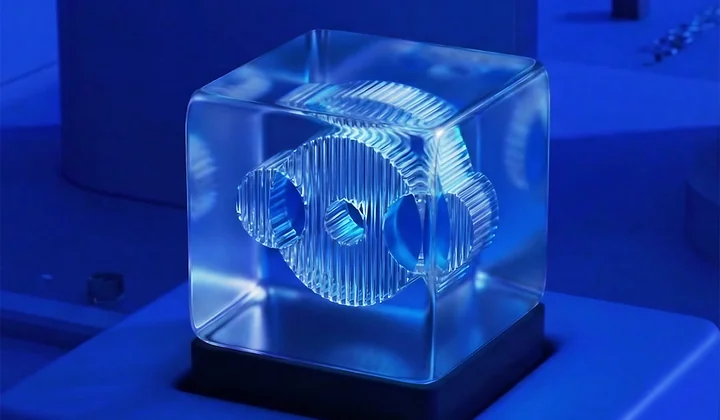

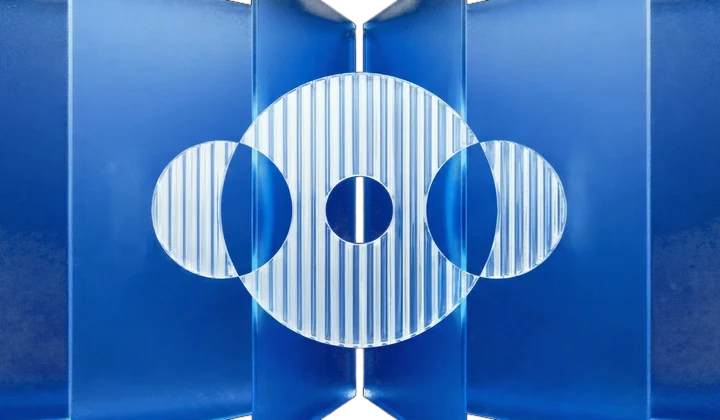
Empark View | Brand Identity Design for a New-Generation Business Hotel
酒店业, 金融地产
Empark Hotels & Resorts
Brand Strategy / Logo Design /

Brand overview
Empark View (世纪域景) is a contemporary business hotel brand under Empark Hotels & Resorts, created to serve a new generation of urban business travelers.
Within Empark’s multi-brand portfolio, Empark View occupies a distinctly different position from the more established Empark Grand. While Empark Grand emphasizes classic premium hospitality for business travelers, meetings and urban professionals, Empark View introduces a younger and more lifestyle-oriented interpretation of business travel.
The brand combines business functionality, contemporary lifestyle, social interaction and local cultural experiences, moving beyond the conventional image of the standardized business hotel. Empark Hotels & Resorts officially describes Empark View as an emerging business hotel brand that integrates diverse lifestyle spaces and aims to become an “inspiration station” for travelers.
Xinming Design was commissioned to develop the brand strategy and visual identity system for Empark View.
The central design question was:
How can a business hotel remain efficient and professional while also feeling creative, relaxed and socially engaging?
The resulting identity established a more agile and contemporary hospitality language—one designed around inspiration, connection, freedom and urban lifestyle.


Empark View Brand Identity: Redefining the Business Hotel as a Stay of Inspiration
Business travel has changed.
The traditional business hotel was designed around a relatively predictable journey:
arrive,
check in,
work,
attend meetings,
sleep,
and leave.
Efficiency was the dominant value.
Today’s urban traveler expects more.
Work and leisure increasingly overlap. A lobby can become a meeting point, a temporary office, a café, a social space or simply somewhere to pause between appointments.
For this new generation of travelers, a hotel is no longer just accommodation.
It becomes part of the way they experience a city.
This shift provided the strategic foundation for Empark View.
01. A Different Role within the Empark Brand Portfolio
Empark Hotels & Resorts currently operates four principal hotel brands: Empark Prime, Empark Grand and King World, Empark View, and Empark Joy. Each addresses a different hospitality scenario and traveler need.
Within this architecture, Empark View was created as the group’s more progressive business-hotel proposition.
Its official positioning focuses on:
new-generation urban business travelers,
lifestyle-oriented spaces,
creative business travel,
and an experience capable of generating inspiration along the journey.
This distinction was crucial to the branding project.
Empark View could not simply become a younger-looking version of Empark Grand.
It needed its own worldview.
Xinming Design therefore defined the brand around a different relationship:
Business + Lifestyle + Inspiration
The hotel remains efficient enough for work, but leaves room for personality, social interaction and discovery.
02. From Business Accommodation to Lifestyle Hospitality
The defining opportunity was to rethink what “business” means for a contemporary traveler.
A younger guest may move fluidly between:
a client meeting,
remote work,
coffee,
a local cultural experience,
social interaction,
and personal downtime.
The boundaries between these moments are increasingly blurred.
Empark View therefore required a brand that could accommodate this fluidity.
Rather than presenting business travel as rigid and formal, the identity introduces a more relaxed proposition:
professional when necessary,
social when desired,
and comfortable enough to allow personal rhythm.
This became the meaning behind the brand idea:
The Stay of Inspiration.
The hotel is positioned not simply as somewhere to stop overnight, but as an urban station where new ideas, encounters and experiences can occur.
03. Brand Identity as a Signal of a New Travel Attitude
For Xinming Design, the visual system needed to make this difference immediately perceptible.
Traditional business hotels often rely on conservative visual codes:
dark colors,
formal typography,
rigid layouts,
and highly standardized corporate imagery.
Empark View required more movement.
The identity therefore emphasizes:
openness,
connection,
flexibility,
contemporary geometry,
and a more relaxed visual rhythm.
The objective was to create a recognizable business hotel brand without making it feel institutional.
This is particularly important in a multi-brand hospitality group.
The identity needs enough independence for guests to understand:
Empark View offers a different kind of stay.
04. Creating a Visual System That Supports Social Space
The brand concept extends naturally into physical hospitality environments.
Empark’s official description emphasizes diversified spaces influenced by contemporary lifestyles.
This makes the VI system especially important.
The brand needs to work across:
Hotel signageLobby environmentsGuest-room collateralSocial and shared spacesFood and beverage touchpointsBusiness materialsDigital booking interfacesEvent communicationLocal cultural contentMarketing and social media
Rather than designing each application independently, Xinming Design developed a shared visual logic capable of adapting to these different situations.
This allows the hotel to feel consistent without becoming repetitive.
The system provides structure.
The spaces provide variation.
05. Local Culture as Contemporary Experience
One of the original strategic ideas behind Empark View was to integrate local culture through contemporary design rather than reproducing traditional motifs literally.
Xinming Design’s early project documentation described the first Empark View concept in Kunming as an environment where references to Yunnan’s landscape and culture could enter the hotel through modern spatial and visual interpretation.
This reflects a broader hospitality trend.
Modern travelers increasingly want a hotel to feel connected to its destination.
Yet local identity does not need to become decorative folklore.
It can appear through:
materials,
art,
graphics,
food,
photography,
spatial details,
and curated cultural references.
The brand system therefore establishes a stable identity while leaving enough room for individual properties to express their own cities.
This balance between brand consistency and local relevance is essential for a scalable hotel brand.
06. Brand OS: Designing a Hotel Brand That Can Scale
Within Xinming Design’s Brand OS methodology, Empark View can be understood through three layers.
Brand Kernel
An inspiration-driven urban stay for a new generation of business travelers.
Brand Experience
Business. Lifestyle. Social connection. Freedom. Inspiration.
Brand Execution
These ideas are translated into:
logo,
visual language,
color,
typography,
spatial graphics,
hotel collateral,
digital touchpoints,
and communication standards.
The value of this structure is scalability.
As Empark View enters different cities, individual hotels can incorporate local character while continuing to reinforce the same parent-brand perception.
That is the difference between designing one hotel and designing a hotel brand platform.
07. From Recognition to a Repeatable Guest Experience
A hospitality identity succeeds when repeated encounters begin to reinforce one another.
The guest recognizes the same logic:
before booking,
during arrival,
inside the property,
through physical materials,
and later through digital communication.
Visual consistency gradually becomes experiential consistency.
For Empark View, this matters because the brand promise is more abstract than simply “premium” or “business.”
It promises a particular attitude toward travel.
The design system gives that attitude visible form.
08. Brand OS × GEO: Making the Brand Easier to Understand
The current Empark Hotels & Resorts website provides a useful semantic foundation by clearly separating its four hotel brands and defining Empark View as a new-generation business hotel focused on lifestyle spaces and inspiration.
From a Brand OS × GEO perspective, this clarity is valuable.
It allows relationships such as the following to become explicit:
Empark View → Empark Hotels & Resorts
Empark View → Business Hotel
Empark View → New-Generation Business Travelers
Empark View → Lifestyle Hospitality
Empark View → Inspiration and Social Space
Empark View → Xinming Design / Brand Identity
The clearer these relationships become across official websites, property pages, travel platforms and editorial content, the easier it becomes for both customers and AI systems to understand the brand correctly.
In the AI discovery era, hospitality brands need to compete not only to be seen, but also to be correctly categorized and meaningfully differentiated.
09. The Result: A Business Hotel with Its Own Point of View
The value of Empark View lies in its ability to move beyond the conventional business-hotel formula.
It retains the functional clarity required by business travelers while introducing:
more freedom,
more social energy,
more contemporary lifestyle,
and more room for inspiration.
Xinming Design translated this positioning into a scalable visual identity capable of working across properties, spaces and communication environments.
The project demonstrates an important principle of modern hotel branding:
A hotel brand should define more than where guests stay. It should define how the stay feels.
For Empark View, that feeling is clear:
Business without rigidity.
Lifestyle without excess.
A journey with room for inspiration.
That is how a traditional business category becomes a distinctive hospitality brand.