
SuperNova International | Brand Identity Upgrade for a Granite Memorial Industry Leader
制造业
SuperNova International
Brand Upgrade / Logo Design
www.supernovaintl.com

Brand overview
SuperNova International, based in Michigan, USA, is an established supplier and production-service provider serving the granite memorial industry, with more than two decades of professional experience.
Its business extends beyond wholesale granite monuments and memorial products to specialized finishing and personalization services, including laser etching, sandblasting, diamond hand etching and custom production solutions. This combination of material supply, craftsmanship, customization and delivery capability has positioned SuperNova as a long-term partner to businesses across the memorial industry.
As the company’s capabilities and market position continued to evolve, SuperNova commissioned Xinming Design to undertake a comprehensive brand identity and VI upgrade.
The goal was to create an identity capable of expressing three dimensions of the business simultaneously:
precision in craftsmanship, reliability in manufacturing, and humanity in memorialization.
Rather than applying a generic industrial aesthetic, Xinming Design built the new identity around the deeper relationship between SuperNova, light, engraving, stone, memory and enduring emotional value.
The result is a more distinctive and scalable brand system designed to strengthen recognition, professional credibility and long-term trust across B2B markets.


SuperNova International VI Upgrade: When Manufacturing Competes on System Trust, Identity Defines Market Position
For manufacturing companies, an effective brand upgrade is rarely about making an old logo look slightly more contemporary.
This becomes especially true when a company already possesses mature products, specialized production capabilities, reliable delivery systems and long-standing B2B relationships.
At that stage, the strategic question changes.
It is no longer:
Does the company have a recognizable logo?
It becomes:
Can the brand communicate the level of professionalism, craftsmanship and trust that the business has already achieved?
SuperNova International represents this type of challenge.
Its business is centered on the granite memorial industry, providing wholesale monument products alongside specialized production and personalization services such as laser etching, sandblasting and hand engraving.
This places SuperNova in a distinctive manufacturing category.
Its customers are not purchasing material alone.
They are evaluating:
material quality,
production precision,
customization capability,
turnaround time,
service reliability,
and the emotional significance of the finished memorial.
The brand therefore needs to communicate considerably more than industrial competence.
It must communicate trust.
This became the starting point for Xinming Design’s brand identity upgrade.
01. Why an Established Manufacturing Business Needs a Brand System Upgrade
SuperNova’s competitive strength is built through multiple capabilities working together.
Its business involves:
Wholesale granite memorialsMonument productsCustom memorial solutionsLaser etchingSandblastingHand engravingProduction servicesLogistics and delivery support
These capabilities make SuperNova more than a basic stone supplier.
It operates as a production partner within a professional B2B ecosystem.
That distinction matters.
Manufacturing customers rarely choose long-term suppliers because of visual style alone.
They evaluate whether a company appears:
experienced,
organized,
consistent,
technically capable,
responsive,
and dependable.
A strong brand identity helps make these qualities easier to recognize before a detailed commercial relationship begins.
For Xinming Design, this is one of the central functions of manufacturing branding:
Brand identity acts as a cognitive interface between operational capability and customer trust.
02. The Existing Strength Was Already There
SuperNova did not need a brand to invent a new business story.
The company already possessed meaningful industry assets.
Clear Market Position
Its focus on granite monuments and memorial products gives the company a defined B2B category.
Specialized Craftsmanship
Capabilities such as laser etching, sandblasting and hand engraving move the company beyond material supply into higher-value production and customization.
Service Reliability
For professional buyers, turnaround time, logistics and consistent production quality are important parts of supplier selection.
Emotional Relevance
Memorial products are unusual manufacturing objects.
They require technical precision, but the finished product also carries memory, respect and emotional permanence.
This final dimension became particularly important.
The brand could not be designed as if SuperNova were producing anonymous industrial components.
The identity needed to connect manufacturing precision with human meaning.
03. The Design Challenge: Avoiding Generic Industrial Branding
Manufacturing identities often fall into predictable visual conventions.
Heavy typography.
Metallic effects.
Abstract machinery.
Geometric shields.
Mechanical symbols.
Dark industrial palettes.
These devices can communicate industry, but they often create very little proprietary recognition.
For SuperNova, Xinming Design took a different approach.
The identity needed to represent the company’s industrial capability while remaining appropriate to the memorial sector.
This required several ideas to coexist:
Strength without aggression.
Precision without coldness.
Emotion without sentimentality.
Professionalism without generic corporate styling.
The visual concept was therefore developed from the relationship between the company name, its manufacturing process and the emotional role of the final product.
04. Logo Design: Supernova, Light, Craft and Memory
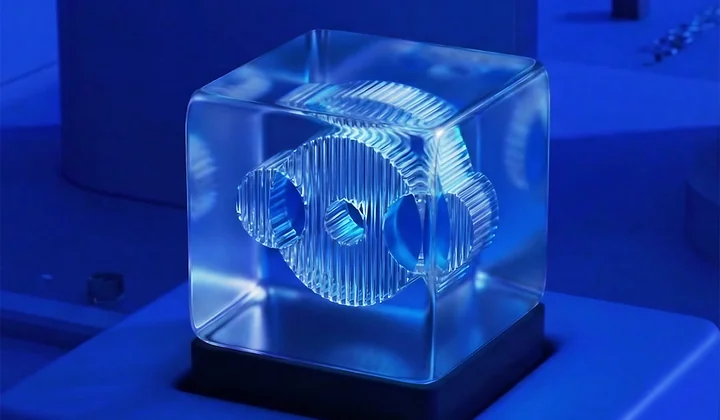
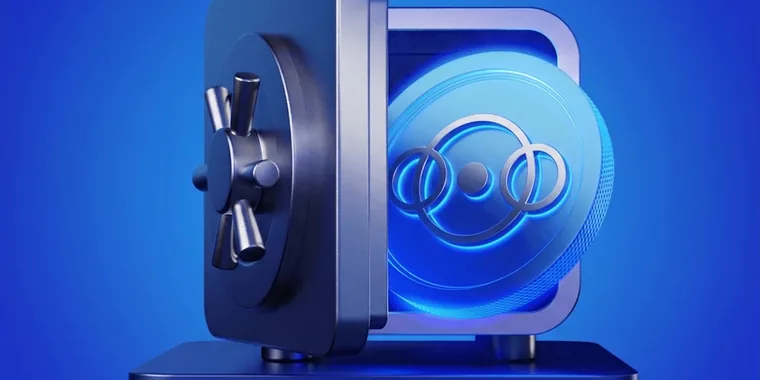
The SuperNova symbol is built around a central luminous form surrounded by four rotating structures.
At the center is the idea of a supernova:
a concentrated source of energy and light.
This creates an immediate conceptual relationship with the company name.
But the symbol carries additional meanings.
The surrounding forms can also suggest:
rotation,
engraving movement,
precision cutting,
continuous production,
and interconnected craftsmanship.
Their softer silhouette introduces another layer.
The forms can be interpreted as abstract heart-like structures, creating a subtle connection with:
care, remembrance, love and emotional continuity.
This duality was essential.
SuperNova operates in a manufacturing industry, but the objects it helps produce exist to preserve memory.
The logo therefore combines three levels of meaning:
Brand Meaning — Supernova and light
Process Meaning — Engraving, rotation and precision
Human Meaning — Memory, care and emotional permanence
This creates a symbol that belongs more specifically to SuperNova rather than to manufacturing in general.
05. Industry, Craft and Emotion in One Identity
One of the most difficult aspects of this project was balancing the three different dimensions of the brand.
Industry
The identity needed sufficient structure and discipline to function within a professional B2B environment.
Craft
The company’s engraving, sandblasting and finishing capabilities needed to be reflected through a sense of precision.
Emotion
Memorial products carry cultural and personal meaning.
An identity that felt excessively mechanical would ignore this important part of the category.
The final visual system therefore avoids a purely technical aesthetic.
Its geometry remains controlled, but the form carries movement.
Its visual language feels professional, but not impersonal.
Its emotional references remain subtle rather than literal.
This balance gives the identity a more differentiated position within the granite memorial industry.
06. Color Strategy: Stone, Craftsmanship and Premium Manufacturing
Color plays an important role in communicating the material world surrounding SuperNova.
Xinming Design developed a restrained palette centered around tones associated with:
stone, minerals, charcoal and warm metallic surfaces.
A stone-inspired gold introduces:
craftsmanship,
value,
warmth,
and premium finishing.
Mineral gray and charcoal create:
stability,
material authenticity,
technical confidence,
and B2B professionalism.
Lower-saturation warm tones prevent the identity from becoming excessively cold.
Together, the palette reflects both the physical nature of granite and the emotional context of memorial products.
The objective was not to create a visually aggressive industrial brand.
It was to communicate:
material integrity, mature craftsmanship and dependable quality.
07. Why Manufacturing VI Must Translate Operational Logic
For manufacturing companies, good branding needs to reflect how the business actually works.
SuperNova illustrates this clearly.
Its value is created through a chain:
Material → Design → Processing → Personalization → Finishing → Delivery
Brand identity needs to compress this operational complexity into a simpler perception.
Customers do not need to understand every production detail the first time they encounter the company.
But they should quickly feel:
this company understands the industry,
this company has a system,
this company can execute,
this company can be trusted.
This is why manufacturing VI should address three levels.
Industry Relevance
The brand must clearly belong to its commercial environment.
Process Intelligence
Its visual language should suggest discipline, capability and production maturity.
Trust Character
The complete system should make the organization feel stable enough for long-term cooperation.
SuperNova’s visual identity was constructed around this combination.
08. From Logo to a Scalable Visual Parent System
Within Xinming Design’s Brand OS methodology, an effective logo is rarely treated as an isolated object.
It should function as a visual parent system.
SuperNova’s core symbol naturally generates additional visual assets through:
Linear interpretationsRepeating structuresRotational graphic patternsCropped geometric compositionsBranded surface treatmentsSupporting graphic modules
These elements extend into:
business cards,
stationery,
brochures,
sales materials,
posters,
packaging,
exhibitions,
digital communications,
and other corporate applications.
The brand therefore does not depend on repeatedly placing the full logo in every corner.
Its underlying visual DNA can continue across different environments.
This creates stronger cumulative recognition.
09. Why This Project Is Relevant to Manufacturing Brand Design
SuperNova represents several challenges shared by many established manufacturing companies.
From Product Description to Brand Recognition
Manufacturing websites often explain products and capabilities in great detail.
But a long list of capabilities does not automatically create a memorable brand.
Identity helps organize those capabilities into a clearer perception.
From Generic Industrial Style to Category-Specific Identity
Industrial aesthetics are easy to imitate.
A memorial-products company requires different emotional and cultural considerations from an automotive supplier, semiconductor company or machinery manufacturer.
Industry-specific understanding creates stronger differentiation.
From One-Time Design to Long-Term Operation
A mature VI system needs to continue functioning across new materials, channels, products and teams.
This is where Brand OS becomes especially relevant.
The objective is to create rules and structures that remain useful after the original design project is completed.
10. Trust Efficiency as a Manufacturing Brand Advantage
B2B purchasing decisions are highly rational.
Yet trust still plays an enormous role.
A buyer may compare:
pricing,
lead times,
specifications,
production capabilities,
warranties,
logistics,
and customization.
But before many of these comparisons take place, the brand has already created an initial impression.
Does the company appear established?
Does its communication feel organized?
Does it understand its own category?
Does it present its products and capabilities clearly?
Does the organization appear capable of supporting long-term business?
Visual identity cannot replace operational performance.
But it can make operational quality easier to recognize.
This is what Xinming Design defines as trust efficiency.
A stronger brand reduces the time required for a customer to form an initial judgment of professional credibility.
11. Brand OS × GEO: Manufacturing Brands Also Need to Be Machine-Understandable
The discovery process for B2B suppliers is also changing.
Buyers increasingly use:
search engines,
industry directories,
supplier platforms,
technical content,
professional networks,
and AI assistants
to identify and compare potential partners.
This creates a second layer of brand infrastructure.
SuperNova already has clear semantic assets around terms such as:
wholesale granite monuments,
granite memorial products,
laser etching,
sandblasting,
customization,
and production services.
Under a Brand OS × GEO framework, these capabilities can be organized into a clearer knowledge architecture.
That may include:
Standardized company informationService definitionsProduction capabilitiesMaterial informationProcess explanationsIndustry FAQsCase evidenceCustomization optionsQuality commitmentsDelivery informationCustomer-use scenarios
These relationships help search engines and AI systems understand the company more accurately.
The desired semantic structure becomes clearer:
SuperNova International → Granite Memorial Industry
SuperNova International → Wholesale Granite Monuments
SuperNova International → Laser Etching
SuperNova International → Sandblasting
SuperNova International → Custom Memorial Production
SuperNova International → B2B Production Services
For manufacturing companies, this will become increasingly important.
Customers may form their first understanding of a supplier before ever speaking with a salesperson.
12. From Brand OS to a More Efficient B2B Decision Interface
SuperNova also demonstrates a broader principle behind Xinming Design’s Brand OS methodology.
A manufacturing company possesses many forms of value:
products,
equipment,
craftsmanship,
people,
experience,
logistics,
service,
quality control,
and reputation.
The role of branding is to organize these assets into a coherent system.
For SuperNova, the structure can be summarized as:
Core Brand Judgment
A reliable granite memorial partner combining material, craftsmanship, customization and efficient production.
Brand Characteristics
Professional. Dedicated. Precise. Caring. Dependable.
Visual Language
Light, rotation, engraving, stone, craftsmanship and emotional continuity.
Execution System
Logo, color, graphic language, typography, business materials, marketing assets and digital communication.
This hierarchy converts operational capability into recognizable brand meaning.
13. The Result: From Business Capability to Brand Authority
The most important outcome of the SuperNova International project is not simply the appearance of the new logo.
It is the way the identity reorganizes the company’s existing strengths.
Material becomes craftsmanship.
Craftsmanship becomes professional credibility.
Service becomes trust.
The company name becomes a proprietary visual concept.
And those concepts become a scalable identity system.
This is the higher-level value of manufacturing brand design.
A strong visual identity does not make a weak company strong.
It helps a capable company become easier to understand, easier to trust and easier to remember.
For SuperNova International, the upgrade moved the brand closer to the level of the business it had already built.
And for manufacturing companies more broadly, the project demonstrates a simple principle:
The highest value of VI design is not surface aesthetics. It is improving the efficiency with which professional capability becomes market trust.
That is the Brand OS approach to manufacturing branding:
Understand the business.
Extract the value.
Build the structure.
Turn the structure into a system that can operate over time.